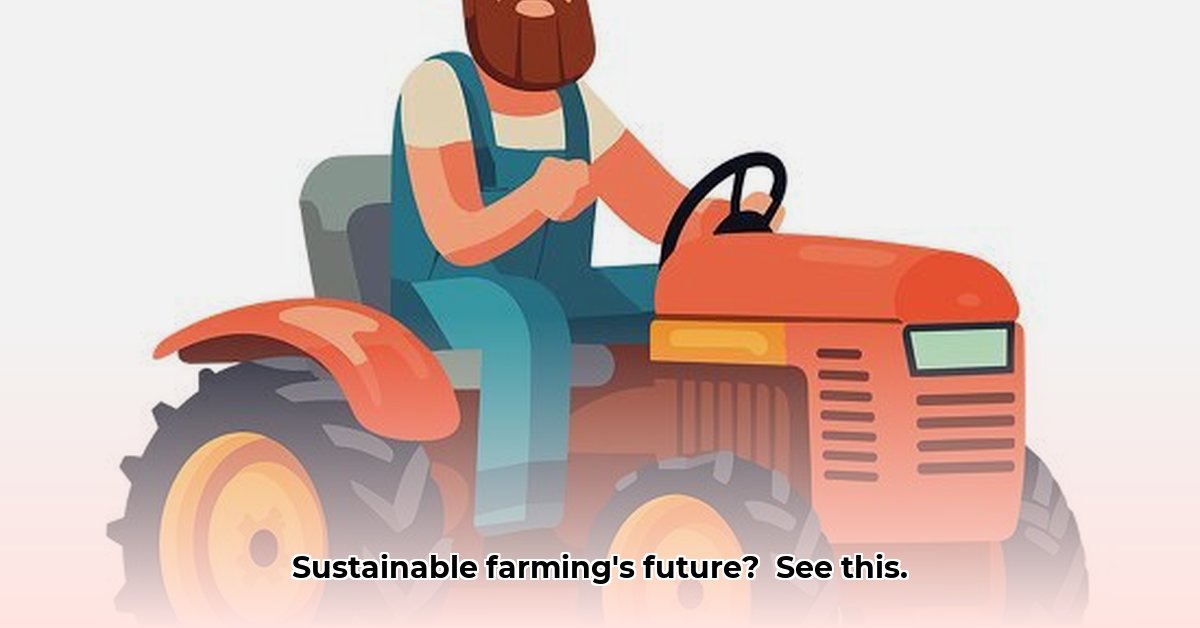
Farmer on Tractor: A Symbol of Sustainable Agriculture's Transformation
That seemingly simple image—a farmer on a tractor—holds profound significance. It encapsulates the ongoing revolution in agriculture, showcasing the powerful synergy between traditional farming practices and cutting-edge technology to create a more sustainable food system. It's a potent symbol of hope, representing the potential for a future where food production nourishes both people and the planet. How can this vision become reality? Learn more about electric tractors here.
The Technological Revolution in Modern Farming
Forget outdated notions of farming; today's agricultural landscape is undergoing a technological transformation. Precision agriculture, guided by GPS and employing drones for crop monitoring and analysis, is dramatically increasing efficiency and reducing environmental impact. Farmers now utilize data-driven insights to optimize fertilizer and water usage, minimizing waste and maximizing yields. Smart irrigation systems, for example, utilize sensors to deliver water only where and when it's needed, conserving precious resources. This technological leap forward is exemplified by the farmer in our image, a figure embodying the integration of modern tools with timeless agricultural wisdom.
Did you know? Studies show that precision agriculture can reduce water consumption by up to 50% and fertilizer use by as much as 30%.
Navigating the Challenges and Rewards of Sustainable Practices
Transitioning to sustainable agriculture isn't without its obstacles. The initial investment in new technologies can be a significant barrier, particularly for smaller farms with limited resources. Access to reliable information, training, and adequate support networks are crucial contributing factors to success. However, the long-term benefits far outweigh the initial hurdles. Sustainable practices promote healthier soil, resulting in more robust crops, cleaner water, and increased biodiversity. This, in turn, leads to greater resilience against climate change and a more secure food supply for all. The farmer in our image, although seemingly at ease, represents the ongoing struggle and ultimate triumph inherent in adopting sustainable methodologies.
Collective Action: A Multi-Stakeholder Approach
The shift toward sustainable agriculture requires a collaborative effort involving farmers, agribusinesses, governments, and consumers. Agribusinesses have a vital role to play by investing in research and development, creating affordable and accessible sustainable technologies. Governments can provide crucial support through financial assistance, training programs, infrastructure improvements, and the establishment of farmer support networks. Consumers, too, have a significant impact by consciously choosing sustainably produced food. The image of the farmer underscores the interconnectedness of this transition – it's a collective endeavor, not an isolated one.
A Vision for the Future of Sustainable Farming
The image of the farmer on the tractor isn't just a reflection of today's agricultural realities; it's a hopeful glimpse into the future. We envision a future of smart farming, where technology empowers farmers to nourish the land and feed the world sustainably. It's a future characterized by collaboration, innovation, and environmental stewardship. This future is not just a possibility; it's within our collective reach.
Actionable Steps for a Sustainable Future
1. Farmers: Invest in sustainable technology by exploring government grants and loans. Develop comprehensive sustainability plans.
2. Agribusinesses: Invest in R&D for affordable, sustainable farming tools. Implement transparent supply chains and support sustainability certifications.
3. Governments/NGOs: Provide training, financial aid, and improved infrastructure, alongside robust support networks for farmers. Invest significantly in agricultural research focused on sustainability.
4. Consumers: Consciously choose sustainably produced food and advocate for transparent food labeling standards. Support initiatives promoting sustainable agricultural practices.
A quantifiable fact: According to a recent study by the USDA, farms adopting sustainable practices have reported a 15% increase in average yields.
"Sustainable agriculture isn't just about environmental responsibility; it's about economic viability and community resilience." -- Dr. Anya Sharma, Professor of Sustainable Agriculture, University of California, Berkeley
The image of the farmer on the tractor is a testament to the ongoing progress and the exciting potential of a sustainable future in agriculture. It urges us to embrace collective action, technological innovation, and collaborative efforts to transform the food system and cultivate a better world for generations to come.